Going Veg
Upcoming EVENt
Scatter Vegan Sweets

Wendy Gabbe Day
Friday, Oct 29, 7pm, McNail-Riley House, 601 W. 13th (at Jefferson), Eugene. FREE - Map
Veg Spotlight

Barbara - Long-term EVEN Member and Volunteer
Veg Wisdom
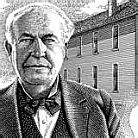
Nonviolence leads to the highest ethics, which is the goal of all evolution. Until we stop harming all other living beings, we are still savages. - Thomas Edison (1847-1931)
Veg Wisdom
While we applaud every effort for the animals, we recognize that if there is to be real, fundamental change for the animals, there need to be many, many more vegetarians---people who stand up and say it is simply wrong to butcher an animals for a fleeting taste of flesh! Source: Vegan Outreach
Veg Wisdom
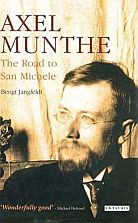
The wild, cruel beast is not behind the bars of the cage. He is in front of it. - Axel Munthe, Swedish Physician, Psychiatrist and Writer (1857-1949)
Become a Member

Please visit our sponsors!
Click on their logos below.
Veg Spotlight







Veg Wisdom
It's far more important to know what person the disease has than what disease the person has. - Hippocrates (460 BC - 380 BC)
Going Veg > What Is Vegan?
What is veganism?
Veganism is a way of life which embodies kindness, generosity and respect for each other, the planet and all living things. Veganism denotes a philosophy and way of living which seeks to exclude-as far as practical and possible-all forms of exploitation of and cruelty to, animals for food, clothing or any other purpose; and by extension, promotes the development and use of animal-free alternatives for the benefit of humans, animals and the environment.
Learn more here: World Peace, Inc.
Vegan Action
Vegan Action's definition is listed below:
What is a VEGAN? A vegan (pronounced VEE-gun) is someone who, for various reasons, chooses to avoid using or consuming animal products. While vegetarians choose not to use flesh foods, vegans also avoid dairy and eggs, as well as fur, leather, wool, down, and cosmetics or chemical products tested on animals.
Why VEGAN? Veganism, the natural extension of vegetarianism, is an integral component of a cruelty-free lifestyle. Living vegan provides numerous benefits to animals' lives, to the environment, and to our own health-through a healthy diet and lifestyle.
Vegan Action's website does a wonderful and thorough job of breaking down "Why Vegan?" into its For the Animals, For the Environment, For Our Health categories.
Don't miss it!
www.vegan.org/about_veganism/index.html
Veganism in a Nutshell
Veganism in a Nutshell
by Bruce Friedrich, PETA
There are probably as many reasons to be a vegan as there are vegans. The five we hear most often at PETA are human rights, the environment, human health, animal welfare, and animal rights. I'll address them each in a moment, but first, let me tell you why I became a vegan.
In 1987, during my first year of college, I read Frances Moore Lappés book Diet for a Small Planet. Basically, Lappé argues that cycling grains, soy, and corn through animals so that we can eat their flesh or consume their milk and eggs is vastly inefficient, environmentally destructive, and contributes to poverty and starvation in the developing world.
After reading Lappé, I wondered how I could claim to care about the environment, how I could claim to care about global poverty, if I kept eating meat, dairy products, and eggs.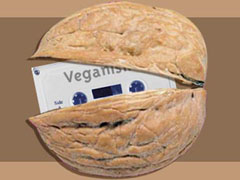 It also occurred to me that animals are made of the same stuff as humans—flesh and blood, and that they suffer just as we do. I grew up in Minnesota and Oklahoma, and it always saddened me to see trucks loaded with turkeys, chickens, pigs, or cows driving through the bitter Minnesota winter or the sweltering, arid Oklahoma summer, taking the animals, through all weather extremes, to what I knew would be a gruesome death. Taken together, the arguments were simply overwhelming. I decided to become a vegan.
Back to those top five reasons we hear for going vegan: A vegan diet is, without a doubt, the best choice for our health, the only sustainable choice for the environment, and the only choice that expresses in a positive manner who we are in the world—compassionate people, compassionate toward people and toward animals.
From www.goveg.com/veganism_health.asp
Why Veganism?
What is a Vegan?
Vegetarians do not eat meat, fish, or poultry. Vegans, in addition to being vegetarian, do not use other animal products and by-products such as eggs, dairy products, honey, leather, fur, silk, wool, cosmetics, and soaps derived from animal products.
Why Veganism?
People choose to be vegan for health, environmental, and/or ethical reasons. For example, some vegans feel that one promotes the meat industry by consuming eggs and dairy products. That is, once dairy cows or egg-laying chickens are too old to be productive, they are often sold as meat; and since male calves do not produce milk, they usually are raised for veal or other products. Some people avoid these items because of conditions associated with their production.
Many vegans choose this lifestyle to promote a more humane and caring world. They know they are not perfect, but believe they have a responsibility to try to do their best, while not being judgmental of others.